Philips Magnavox AZ7448 or AZ7444: What to Know
What exactly are the Philips Magnavox AZ7448 and AZ7444
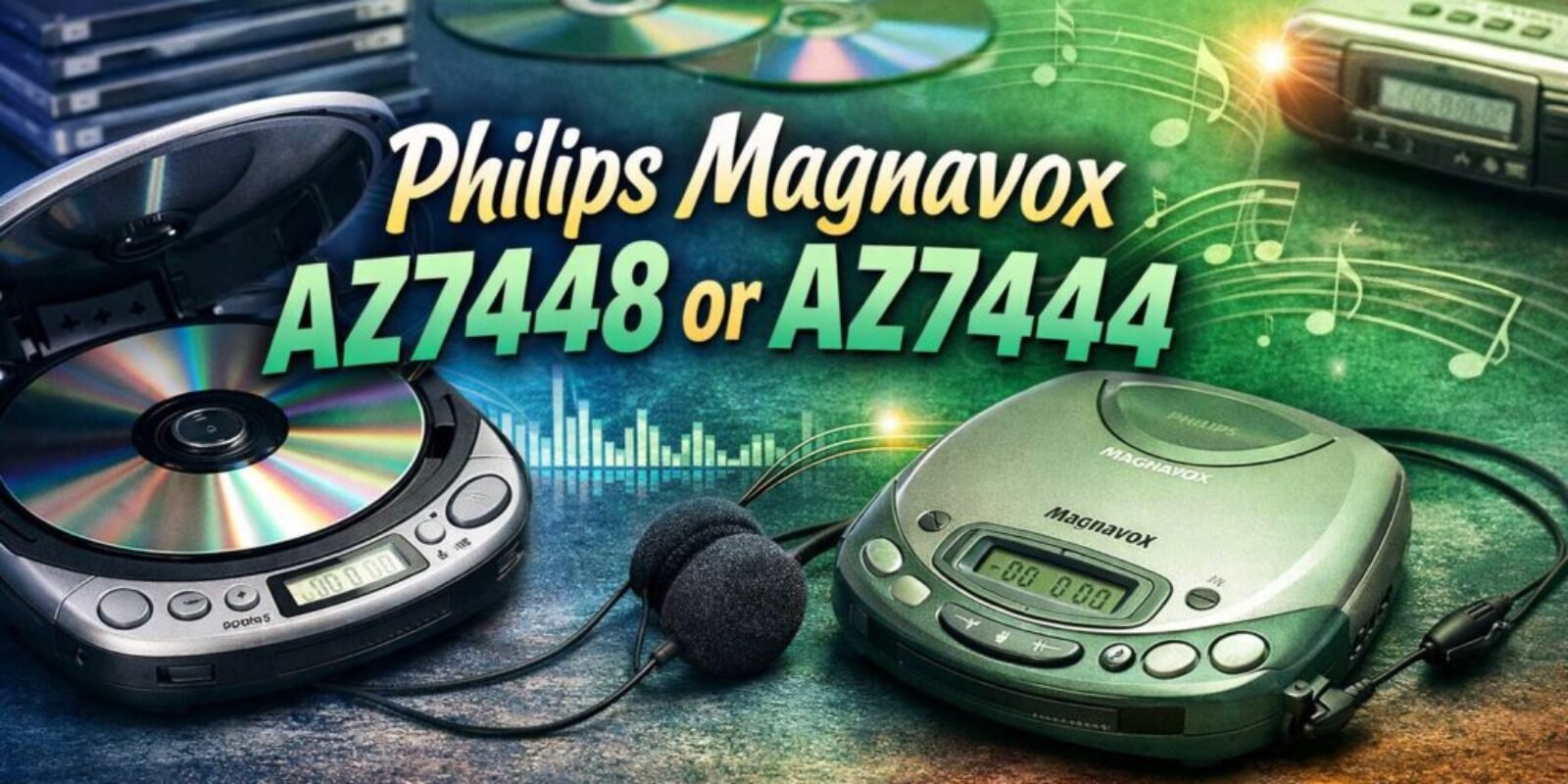
The AZ7448 and AZ7444 are compact, battery-powered CD players designed for personal listening through headphones. They belong to a category often referred to as Discman-style devices, created for playing standard audio CDs while traveling or commuting.
Both models share a similar purpose and design philosophy. They focus on basic playback functions such as play, pause, skip, and sometimes anti-skip protection. Some variants may include radio functionality or support for MP3 CDs, though this depends on the exact version.
In practical terms, these devices were built for reliability rather than flexibility. There is no Bluetooth, no internal storage, and no integration with modern digital ecosystems. Their value lies in doing one job well, which is playing CDs without complication.
Another important point is build quality. Compared to many modern low-cost electronics, older Philips units often feel more solid. However, age affects internal components, especially lasers and moving parts, which directly impacts performance today.
How do these portable CD players perform in real use
In real-world use, these players deliver consistent audio quality when paired with decent headphones. The sound output is generally clean and balanced, reflecting the quality of the CD rather than adding processing or enhancement.
Battery performance depends on condition and usage. Originally, these devices could run for several hours on AA batteries, but modern usage may vary due to wear or battery quality. Using rechargeable batteries can improve practicality.
Anti-skip protection is another factor that affects usability. While these models were designed to handle light movement, they are not ideal for heavy activity like running. Even with anti-skip features, sudden motion can still interrupt playback.
One common issue today is mechanical wear. Since these are aging devices, problems like skipping, slow disc reading, or failure to spin can occur. Buyers often underestimate this and assume all units will perform like new, which is rarely the case.
Also Read: Meaimee 3: What It Is and Why It’s Gaining Attention
What should you check before buying one today
Before buying, the most important step is verifying that the device reads discs reliably. A working laser is essential, and replacements are not always easy or cost-effective. Testing with multiple CDs is a practical way to confirm performance.
Physical condition also matters. Check for loose hinges, worn buttons, or battery compartment corrosion. These small details can indicate how the device was used and stored over time.
Accessories are often overlooked but important. Original adapters, headphones, or packaging can add value, but more importantly, a proper power source ensures stable operation. Using incorrect adapters can damage the unit.
Another common mistake is ignoring compatibility expectations. These players are limited to CDs, and sometimes MP3 CDs if supported. They will not connect to phones or stream music, so expectations should match their intended use.
Who are these devices actually suitable for
These players are best suited for people who already own CD collections and want a dedicated device to play them. They are also useful in situations where internet access is limited or not desired.
Collectors and enthusiasts often appreciate these models for their design and historical value. For them, the appeal is not just functionality but also nostalgia and craftsmanship from an earlier period of consumer electronics.
They can also serve as a simple backup music solution. Since they do not rely on apps or updates, they work independently of modern digital systems, which can be an advantage in certain environments.
However, they are not ideal for users who expect convenience. Anyone used to streaming, wireless audio, or large digital libraries may find these devices restrictive and outdated.
Also Read: Thelowdownunder Travel: Guide to Better Travel Planning Decisions
Are there better alternatives for modern listening
For most people today, modern devices offer far greater convenience. Smartphones, digital audio players, and streaming services provide instant access to large music libraries without physical media.
Even among CD-based options, newer portable players with Bluetooth or USB support offer more flexibility. These bridge the gap between physical and digital listening, which older models cannot do.
Another practical alternative is ripping CDs into digital formats and storing them on a phone or computer. This preserves the music while removing the limitations of physical playback.
Choosing between these options depends on priorities. If simplicity and nostalgia matter, older CD players still have value. If convenience and versatility are more important, modern solutions are clearly more practical.
Conclusion
The Philips Magnavox AZ7448 and AZ7444 represent a straightforward approach to portable music, focused entirely on CD playback. They remain functional for specific use cases, especially for those who value simplicity or already own physical media.
At the same time, their limitations are clear in a modern context. Lack of connectivity, aging components, and dependence on CDs make them less practical for everyday use. Anyone considering them should weigh nostalgia and purpose against convenience and reliability.
In the end, these devices are best seen as niche tools rather than general solutions. They still serve a purpose, but only for the right kind of user with the right expectations.
Frequently Asked Questions (FAQs)
1. What is the Philips Magnavox AZ7448 or AZ7444 used for?
The Philips Magnavox AZ7448 or AZ7444 is used for playing standard audio CDs in a portable format. It allows users to listen to music through wired headphones without needing internet access or digital streaming. These devices were designed for simple, personal listening on the go, making them useful for people who still own CD collections or prefer offline playback.
2. Do these CD players support MP3 or digital formats?
Some versions may support MP3 CDs, but they do not support modern digital formats like streaming, Bluetooth audio, or USB playback. This means you can only play music that is burned onto a compatible CD, and functionality depends on the specific model variant.
3. Are these devices still reliable today?
Reliability depends heavily on the condition of the unit. Since these are older electronics, issues like weak lasers, skipping, or battery problems are common. A well-maintained unit can still perform well, but buyers should always test functionality before purchasing.
4. Can you use them for workouts or outdoor activities?
They are not ideal for high-movement activities. While some models include anti-skip protection, they are better suited for stationary or light movement use such as commuting or casual listening. Running or intense motion can still cause interruptions.
5. Is it worth buying one instead of a modern music device?
It depends on your needs. If you value simplicity and already own CDs, it can be a practical choice. However, for most users, modern devices offer greater convenience, portability, and access to music without the limitations of physical media.